Scientists decode cat urine signals, revealing feline identity and status
Scientists have decoded the chemical signatures in cat urine, revealing that felines use these markers to identify each other’s identity, sex, and reproductive status. This discovery enhances our und…
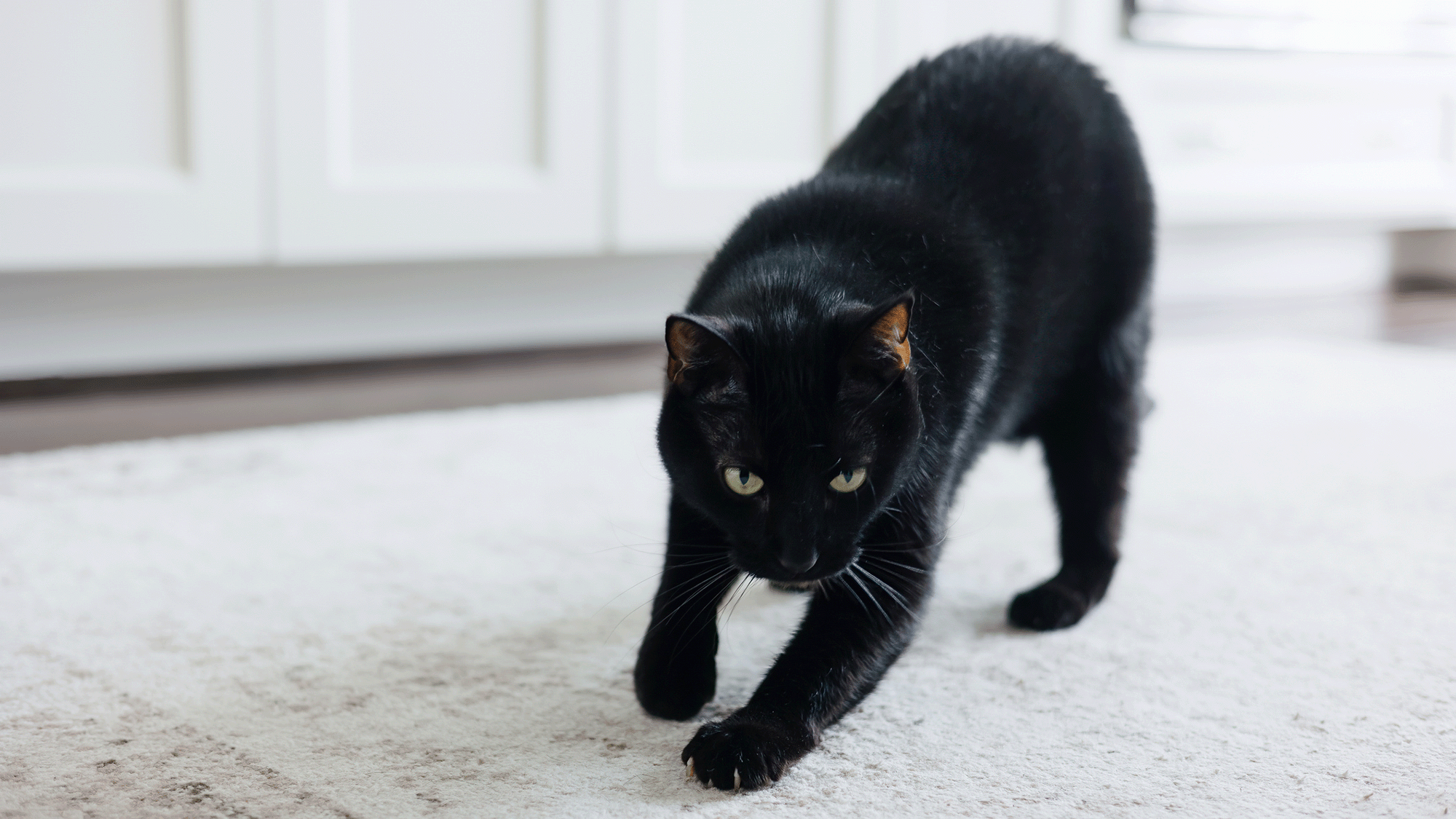
Scientists have finally decoded the complex chemical language hidden within cat urine, revealing that felines use these secretions to exchange detailed personal information with one another. Researchers from the Max Planck Institute for Chemical Ecology in Germany analyzed the volatile compounds in urine samples from domestic cats and found specific markers that allow individuals to recognize each other’s identity, sex, and reproductive status. This discovery sheds new light on how cats, often perceived as solitary creatures, maintain social structures and communicate without direct contact. The study, published in the journal Nature Communications, represents a significant leap forward in understanding feline behavior and the sophisticated role of olfactory signals in their daily lives.
For years, pet owners and veterinarians have observed that cats mark their territory with urine, but the precise function of this behavior remained largely a mystery. While it was known that urine contains pheromones, the specific chemical signatures responsible for individual identification were elusive. The new research suggests that cat urine acts like a biological business card. When a cat urinates, it leaves behind a unique chemical profile that other cats can detect and interpret. This system allows cats to avoid direct confrontation by assessing the strength and status of rivals from a distance. It also helps potential mates identify suitable partners. The ability to decode these signals explains why cats are so territorial and why they often react strongly to the scent of unknown animals in their environment.
The team used advanced gas chromatography-mass spectrometry to identify specific volatile organic compounds in the urine. They found that the chemical composition varies significantly between individual cats, creating a distinct olfactory fingerprint. Male and female cats produce different ratios of these compounds, which helps distinguish sex. Furthermore, the scent changes depending on whether a female is in heat, providing crucial reproductive information to males. In behavioral tests, cats were able to distinguish between the urine of familiar and unfamiliar individuals based solely on these chemical cues. This confirms that the olfactory system is the primary channel for social communication in domestic cats, far more important than visual or auditory signals in many contexts.
This breakthrough has practical implications for both pet owners and wildlife conservationists. Understanding how cats communicate can help reduce stress in multi-cat households by allowing owners to manage environmental scents more effectively. It can also aid in the management of feral cat populations, where controlling territorial marking might reduce conflict and disease spread. For the scientific community, the study opens new avenues for exploring the evolution of chemical communication in mammals. As we continue to unravel the secrets of animal behavior, we gain a deeper appreciation for the complexity of the natural world. The next step for researchers is to determine how environmental factors, such as diet and health, influence these chemical signals and how they might change over a cat’s lifetime.
Read Full Story at Live Science →