Astronomers discover oldest supermassive black holes, challenging growth theories
Astronomers have discovered the oldest known pair of supermassive black holes, identified as quasars, dating back to just 900 million years after the Big Bang. This finding challenges existing theori…
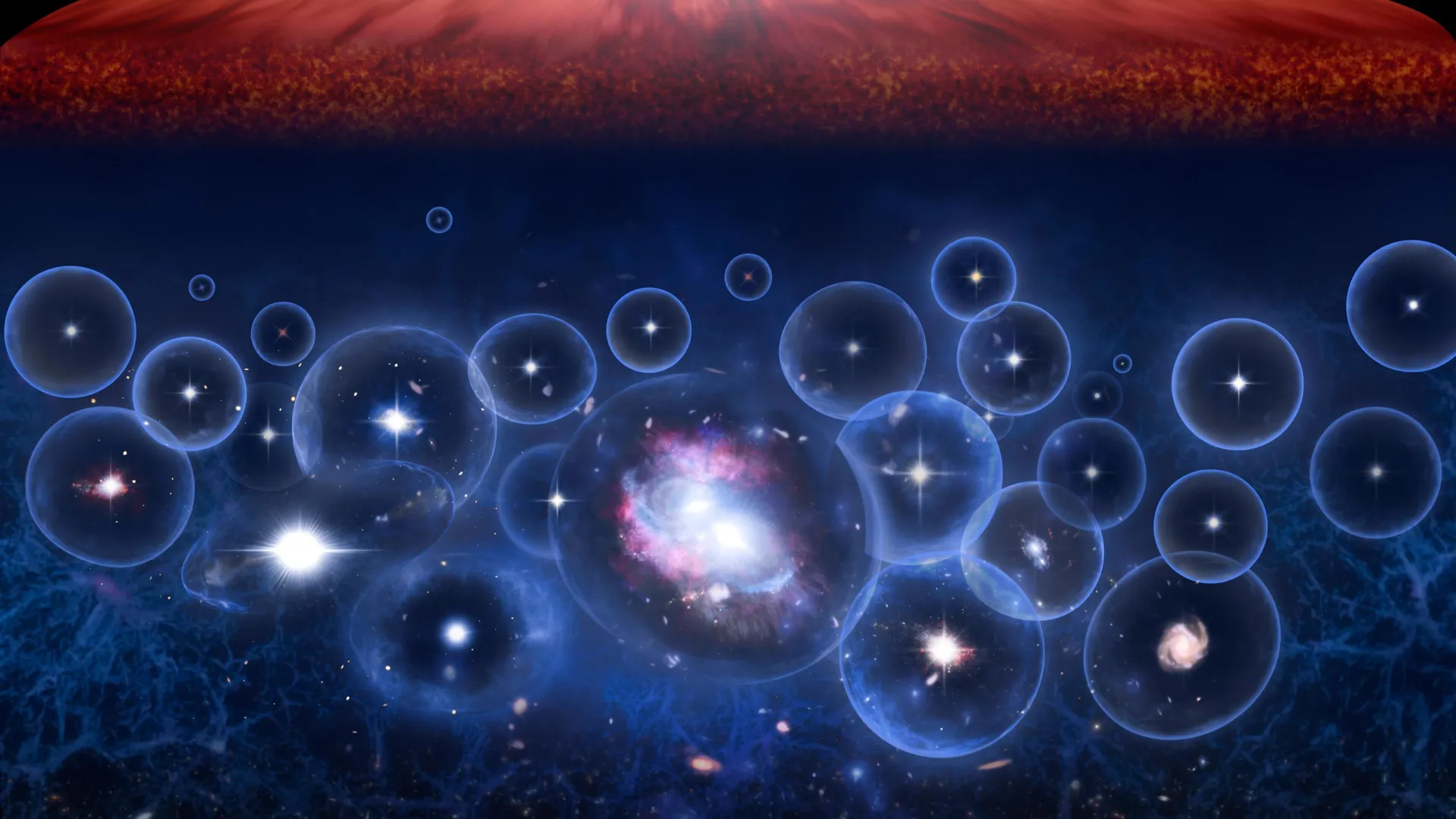
Astronomers have identified the oldest known compact pair of quasars, two supermassive black holes that shone when the universe was just 900 million years old. The objects, spotted in a deep sky survey by a team at the University of Tokyo using the Subaru Telescope, weigh roughly 1.5 billion and 400 million times the mass of the Sun. Their close proximity – less than 30 kiloparsecs apart – makes them the earliest example of a binary quasar system ever observed.
The find matters because it pushes the timeline for black‑hole growth far beyond current expectations. Conventional models say that black holes need several hundred million years of steady gas accretion, or a series of mergers, to reach such sizes. Yet these giants were already in place less than a billion years after the Big Bang, a period when the first galaxies were just forming. Their existence forces theorists to rethink how quickly matter can collapse and feed a black hole in the infant universe.
The discovery came after the survey flagged an unusually bright, double‑peaked emission line in the spectrum of a distant galaxy. Follow‑up spectroscopy with the Keck Observatory confirmed two distinct broad‑line regions, each indicating a separate active nucleus. The larger black hole, at 1.5 billion solar masses, is comparable to the most massive quasars known at later epochs, while its companion, at 400 million solar masses, is still unusually massive for its age. Dr. Aiko Tanaka, lead author of the study, said the pair “offers a rare laboratory for testing the physics of early black‑hole assembly.” Independent experts called the result “a game‑changer” for cosmology.
Researchers plan to observe the system with the James Webb Space Telescope and the Atacama Large Millimeter/submillimeter Array in the coming months. High‑resolution imaging will map the host galaxies and any surrounding gas, while JWST’s infrared spectrograph can probe the accretion disks in unprecedented detail. The data could reveal whether rapid, super‑Eddington feeding or direct collapse of massive gas clouds drove the early growth. If confirmed, the findings will reshape theories of how the first supermassive black holes formed and how they influenced the birth of galaxies.
Read Full Story at ScienceDaily →