Astronomers discover GJ 9827 white dwarf star producing unexpected shock wave
Astronomers have discovered a dead white dwarf star in the GJ 9827 system producing an unexpected shock wave, potentially linked to its magnetic field and an unidentified force dubbed a "mystery engi…
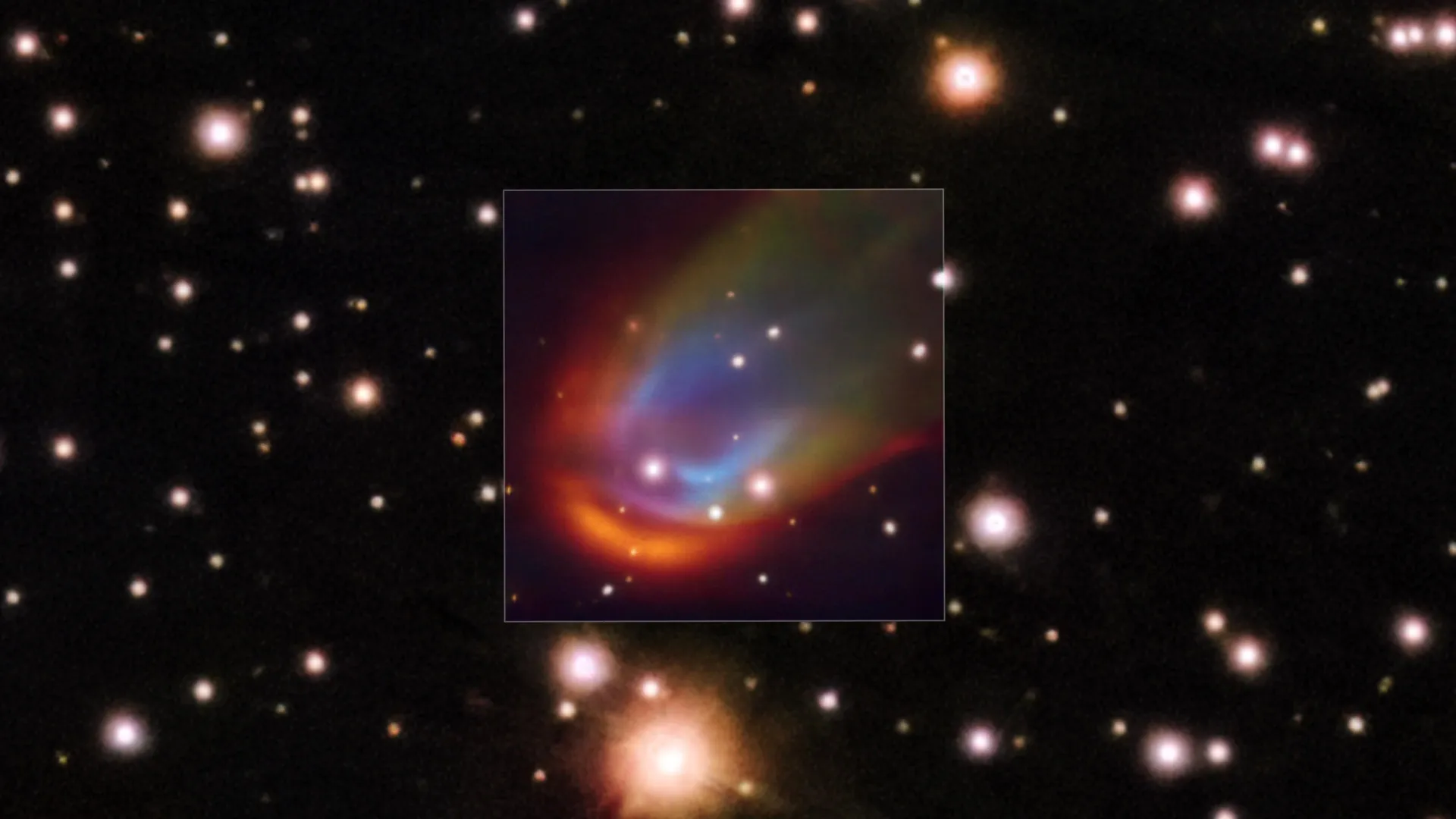
Astronomers have discovered a dead white dwarf star that is unexpectedly producing a powerful shock wave, a phenomenon that has lasted for at least 1,000 years. This unusual occurrence was found in a star system known as GJ 9827, located about 100 light-years from Earth. The star's magnetic field might be contributing to the shock wave, but researchers suspect there is an additional, unidentified force at play, referred to as a "mystery engine."
This discovery is significant because it challenges existing theories about the behavior of dead stars. White dwarfs are typically remnants of stars that have exhausted their nuclear fuel and shed their outer layers. They usually do not exhibit dynamic phenomena like shock waves, making this finding particularly intriguing. The persistence of the shock wave raises questions about the mechanisms that can sustain such an effect over centuries, and it suggests that there could be more complex processes at work in the aftermath of stellar evolution than previously understood.
Researchers used advanced telescopes and observational techniques to analyze the data from GJ 9827. They found that the shock wave could be linked to interactions between the star's magnetic field and its surrounding environment. The presence of this shock wave in a star with no detectable disk adds another layer of complexity, as many shock waves are typically associated with material being ejected from a star. The team is now focusing on unraveling the properties of the magnetic field and exploring what this "mystery engine" could be.
Looking ahead, this discovery may prompt further investigations into other white dwarfs and their behaviors. Understanding this shock wave could provide insights into the life cycles of stars and the evolution of the cosmos. It may also lead to new theories about stellar remnants and their interactions with the interstellar medium. As astronomers continue to study these phenomena, they hope to clarify the processes that govern the late stages of stellar life and deepen our understanding of the universe.
Read Full Story at ScienceDaily →