Nepalese responders lead recovery efforts after deadly glacial flood
A flash flood in Nepal, caused by a glacial collapse, killed over 1,500 people and displaced around 100,000 residents, devastating essential infrastructure and increasing malnutrition risks as winter…
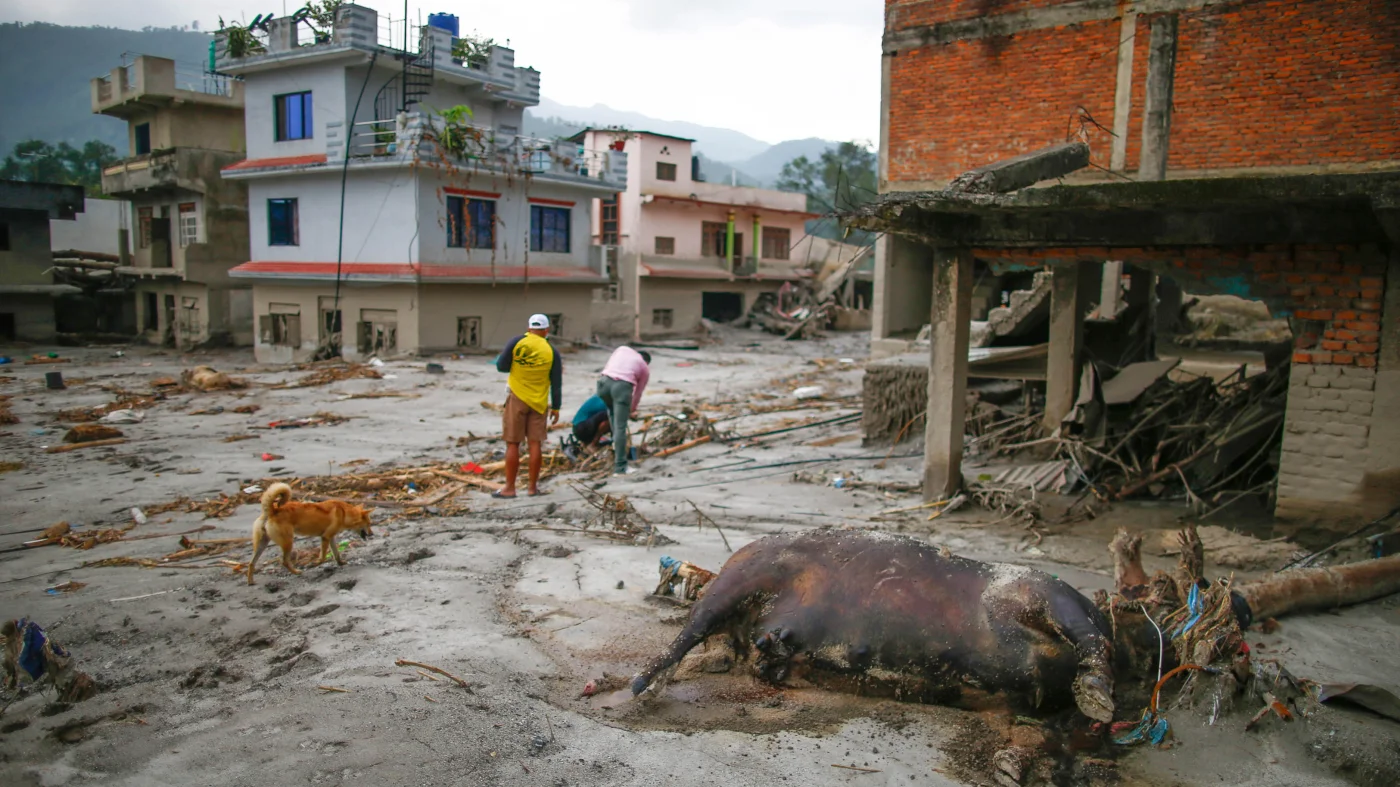
A flash flood and mudslide triggered by a glacial collapse on the Trishuli River in Devighat, Bidur Municipality, Nuwakot district, killed more than 1,500 people, left over 5,000 missing and displaced roughly 100,000 residents, and forced survivors like Januka Dhital to abandon their homes and livelihoods. Dhital, a caterer who was preparing snacks for an event when a man on a scooter warned her of the approaching water, escaped with her young son on the scooter and later reunited with her husband and daughter, all of whom survived but lost everything. The disaster struck in the early hours of Tuesday, sending a wall of darkness, dust and debris down the hillside and washing away houses, schools, health centers and essential infrastructure.
The tragedy comes as climate‑induced glacial melt intensifies across the Himalayas, making such sudden outbursts more likely. Experts say rising temperatures have weakened the stability of glaciers, increasing the frequency of ice‑lake outbursts and debris flows that can devastate downstream communities. Nepal’s monsoon season, already prone to heavy rains, amplified the impact of the glacial collapse, turning a natural event into a humanitarian crisis. International attention has waned since the initial helicopter searches, leaving local responders to shoulder the bulk of recovery work amid a looming winter.
United Nations assessments show the flood destroyed seven health facilities, 23 schools, 10,000 toilets and 64 water systems, crippling basic services for the affected population. UNICEF’s chief of health, Shyam Pathak, warned that malnutrition rates are rising as winter approaches, and that the scale of damage “is unimaginable.” In the immediate aftermath, Dhital’s family moved into a temporary holding centre, staying for about a month before being transferred to a longer‑term shelter. Now, Dhital has turned her own loss into a mission, volunteering as an aid worker to help neighbours rebuild homes, distribute food and restore water supplies, even as she struggles to replace the catering business that sustained her family.
The next phase will focus on rebuilding infrastructure and restoring livelihoods while addressing the looming health risks of cold weather and food insecurity. The Nepalese government, backed by UN agencies, is coordinating the construction of new schools and clinics, but progress is slow due to limited funding and the sheer number of displaced families. International donors are being urged to renew support as the disaster’s long‑term effects become clearer. For survivors like Dhital, the road ahead is both a personal and collective effort to stitch their shattered community back together.
Read Full Story at NPR News →